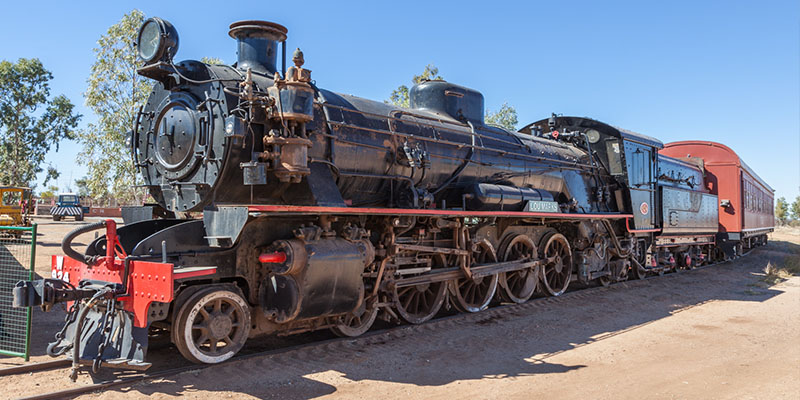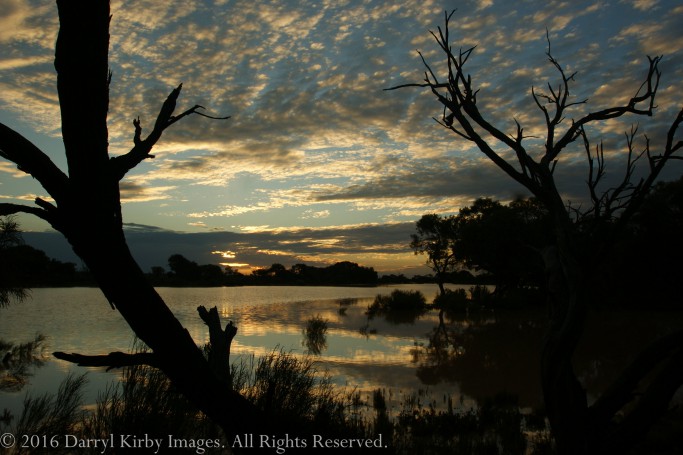
Beresford Siding on the Old Ghan Railway, along the Oodnadatta Tk. SA
Beresford Siding on the Old Ghan Railway.
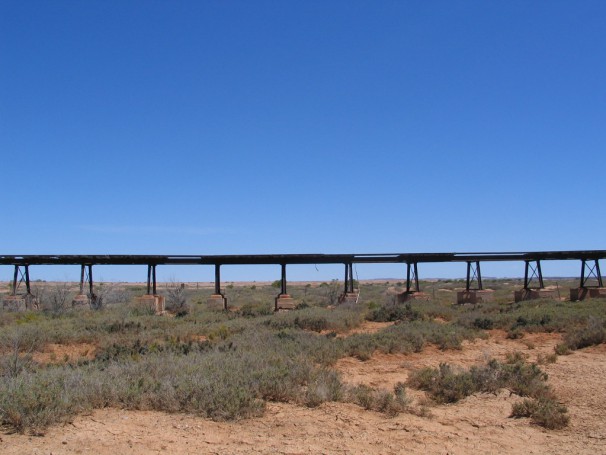
Old Ghan bridge
A span of the Old Ghan railway outside of Maree
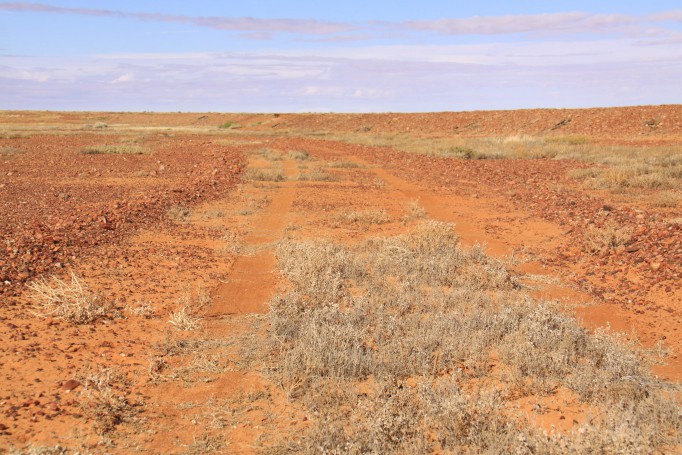
Old Ghan Railway
4940463733_31ce88ad29_k
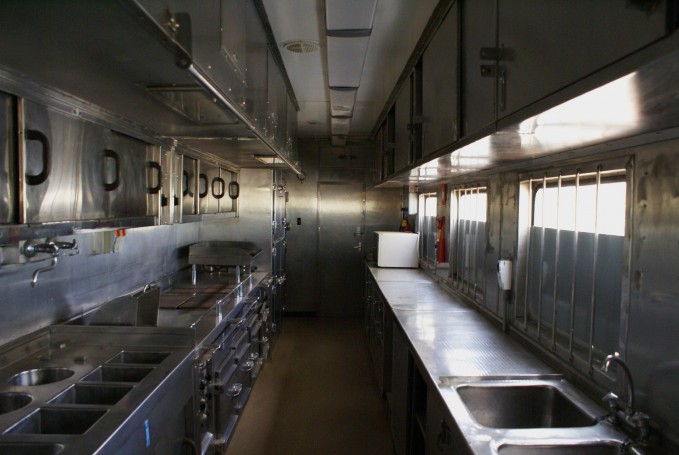
The Old Ghan galley
July 2009
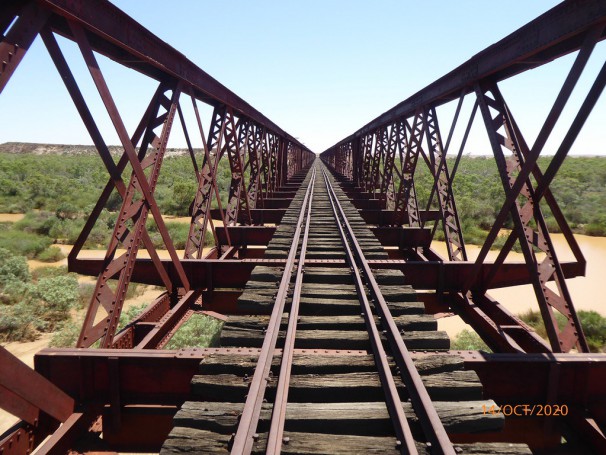
Algebuckina Bridge
Old Ghan railway crossing of the Neales River on Allendale Station..
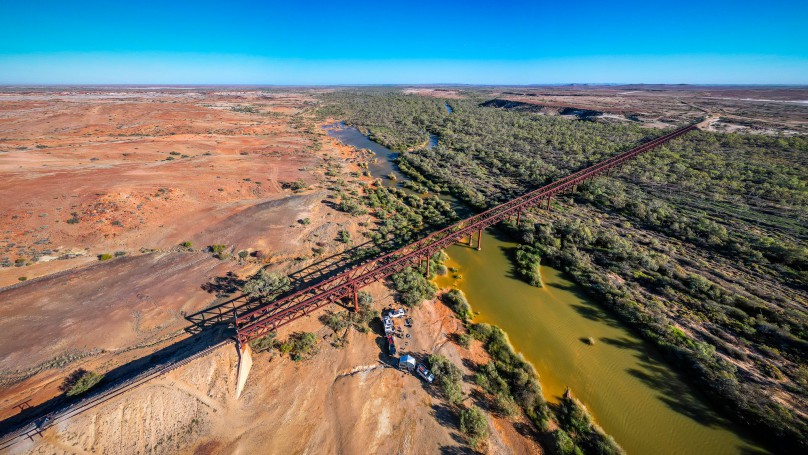
Algebuckina Bridge
The Algebuckina Bridge of the Old Ghan Railway over the Neales River on Oodnadatta Track in SA. Built in the 1880s this spectacular wrought iron bridge carried the former Alice Springs narrow gauge railway across the flood plain of the River Neales. After a severe flood in 1974, which almost reached the bridge decks, the line was closed in 1981 and a new route built 100 miles further west.
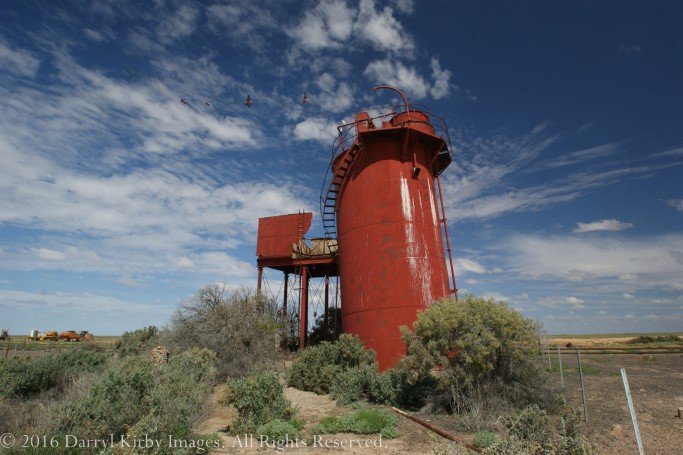
Curdimurka Railway Siding, Oodnadatta Track (Part of the Old Ghan line)
Curdimurka Railway Siding, Oodnadatta Track (Part of the Old Ghan line) This water tower & desalination tank were used to supply water to the Old Ghan locos.
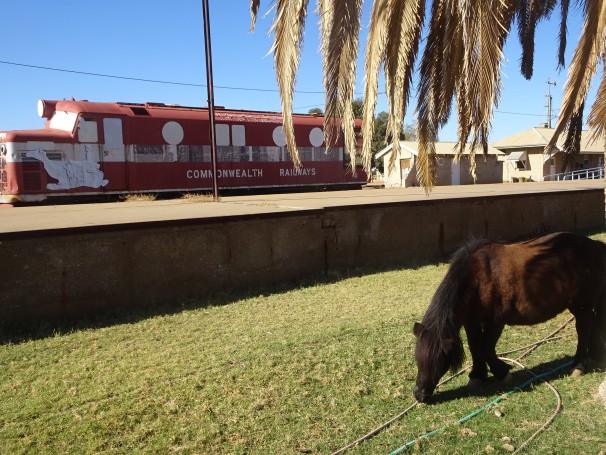
Marree. The disused railway station. The Old Ghan train to Alce Springs left from here. Grazing horse.
Marree/Herrgott Springs. Population 65. These semi desert Aboriginal lands were first sighted by white men in 1840 when Edward John Eyre and his exploration party reached Lake Eyre. For some time people thought Lake Torrens and Lake Eyre was one big inland sea but explorations by Surveyor General George Goyder in 1860 proved that the lakes were separate. At that time Governor MacDonnell named the lake after explorer Eyre (now Kati Thanda). It is about 90 kms from Marree. This area of SA is underpinned by deep artesian waters contained under great pressure and in some places they bubble to the surface forming springs. Salts and other minerals from the saline waters eventually create calcium walls around the springs as the water evaporates hence the term mound springs. When Sir Charles Todd was heading the construction of the Overland Telegraph in 1870- 1872 from Port Augusta to Darwin a camp was located at Herrgott Springs which was the first European name for the site of Marree. It was named after explorer John McDougall Stuart‘s botanist Joseph Herrgott who discovered a mound spring in 1859. There are over 5,000 mound springs in SA and they were vital to the construction of the Overland Telegraph.
The town emerged when the Great Northern Railway reached Herrgott Springs in 1884. Before the survey a hotel and a general store opened in 1882.From the beginning the locals and towns people called the place Marree but the government railway station was Herrgott Springs. The Police Station and Post Office opened in 1883 and the school in 1884. During World War One this German name was changed to Marree in line with previous local usage. By 1885 the town had the two storey Great Northern Hotel, two general stores, two butchers, three saddlers and an iron Wesleyan Methodist church and it had 600 residents. This church was used as the government school which was only built in 1908. The Post Office began in a tent until a building was erected in 1886 and it doubled as a repeater station for the Overland Telegraph. The Marree hospital opened in 1912. The railway was the focus of the early town and in 1891 there was a government survey to see if a railway line from Marree up the Birdsville was viable. Another survey was undertaken in 1916 but nothing eventuated. Supplies went up and down to Birdsville by camel trains
Many Afghan cameleers were based at the springs as this was the starting point for camel trains to Birdsville, Oodnadatta and elsewhere. Around 1900 about 1,500 camels were based in Marree with 800 owned by just one Afghan. Although motor transport developed in the 1920s the Birdsville track cameleers were in Marree until 1949. Recently a replica Muslim mosque has been erected in the town to commemorate the role the Afghans played in servicing the Birdsville track. The first Mosque open by 1884 and was replaced twice before it closed. Its prayer rugs were sent to the Gilbert St. Mosque in Adelaide. Afghan names in Marree included Dervish, Moosha, Khan, Balook, Wahub, Dadih, Goolamdeen etc. Tom Kruse ran a truck mail service to Birdsville from 1936 to 1963 although the service continued until 1975 when an air service took over. 300 or so date palms were planted in Marree as a trial in 1884 but they did not thrive after about 30 years. The new standard gauge railway to Marree opened in 1957 employing about 85 men as the Ghan to Alice Springs changed gauge here from standard to the narrow 3’6” gauge. This railway closed in 1980 and the town has declined but tourism keeps it alive. Marree has a population of about 100 of which 60 % are men so it is a great place for women to find a partner! Marree Aboriginal School has two primary and one secondary class and six part time teachers. The town also has a Royal Flying Doctor service office, old Commonwealth Railway deserted train engines, and one of the trucks used by Tom Kruse from 1936. When the railway reached Marree in 1884 the town grew and by around the turn of the century the railway divided the town racially with the Europeans on the side with the hotel, the school, the Police Station and the Afghan cameleers and the Djeri Aboriginals on the other side. This is no longer the case as the Afghan cameleers are gone and few Europeans live in Maree these days.
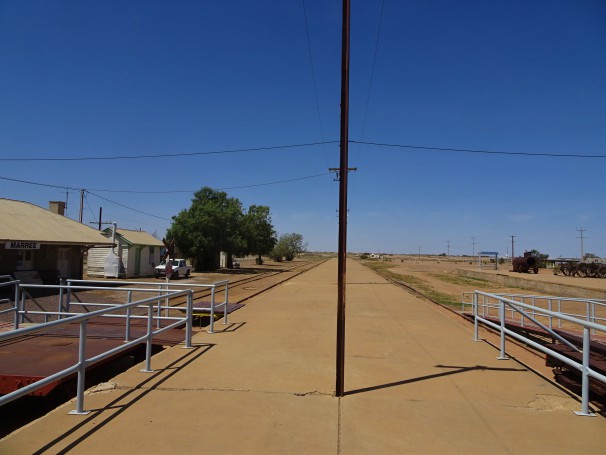
Marree. The platform of the disused railway station. Station building on the left. This was used by the old Ghan train service to Alice Springs from 1929 to 1980.
Marree/Herrgott Springs.
These semi desert Aboriginal lands were first sighted by white men in 1840 when Edward John Eyre and his exploration party reached Lake Eyre. For some time people thought Lake Torrens and Lake Eyre was one big inland sea but explorations by Surveyor General George Goyder in 1860 proved that the lakes were separate. At that time Governor MacDonnell named the lake after Eyre (now Kati Thanda). It is about 90 kms from Marree. This area of SA is underpinned by deep artesian waters contained under great pressure and in some places they bubble to the surface forming springs. Salts and other minerals from the saline waters eventually create calcium walls around the springs as the water evaporates hence the term mound springs. When Sir Charles Todd was heading the construction of the Overland Telegraph in 1870- 1872 from Port Augusta to Darwin a camp was located at Herrgott Springs which was the first European name for the site of Marree. It was named after explorer John McDougall Stuart‘s botanist Joseph Herrgott who discovered a mound spring in 1859. There are over 5,000 mound springs in SA and they were vital to the construction of the Overland Telegraph.
The town emerged when the Great Northern Railway reached Herrgott Springs in 1884. Before the survey a hotel and a general store opened in 1882.From the beginning the locals and towns people called the place Marree but the government railway station was Herrgott Springs. The Police Station and Post Office opened in 1883 and the school in 1884. During World War One this German name was changed to Marree in line with previous local usage. By 1885 the town had the two storey Great Northern Hotel, two general stores, two butchers, three saddlers and an iron Wesleyan Methodist church and it had 600 residents. This church was used as the government school which was only built in 1908. The Post Office began in a tent until a building was erected in 1886 and it doubled as a repeater station for the Overland Telegraph. The Marree hospital opened in 1912. The railway was the focus of the early town and in 1891 there was a government survey to see if a railway line from Marree up the Birdsville was viable. Another survey was undertaken in 1916 but nothing eventuated. Supples went up and down to Birdsville by camel trains
Many Afghan cameleers were based at the springs as this was the starting point for camel trains to Birdsville, Oodnadatta and elsewhere. Around 1900 about 1,500 camels were based in Marree with 800 owned by just one Afghan. Although motor transport developed in the 1920s the Birdsville track cameleers were in Marree until 1949. Recently a replica Muslim mosque has been erected in the town to commemorate the role the Afghans played in servicing the Birdsville track. The first Mosque open by 1884 and was replaced twice before it closed. Its prayer rugs were sent to the Gilbert St. Mosque in Adelaide. Afghan names in Marree included Dervish, Moosha, Khan, Balook, Wahub, Dadih, Goolamdeen etc. Tom Kruse ran a truck mail service to Birdsville from 1936 to 1963 although the service continued until 1975 when an air service took over. 300 or so date palms were planted in Marree as a trial in 1884 but they did not thrive after about 30 years. The new standard gauge railway to Marree opened in 1957 employing about 85 men as the Ghan to Alice Springs changed gauge here from standard to the narrow 3’6” gauge. This railway closed in 1980 and the town has declined but tourism keeps it alive. Marree has a population of about 100 of which 60 % are men so it is a great place for women to find a partner! Marree Aboriginal School has two primary and one secondary class and six part time teachers. The town also has a Royal Flying Doctor service office, old Commonwealth Railway deserted train engines, and one of the trucks used by Tom Kruse from 1936.
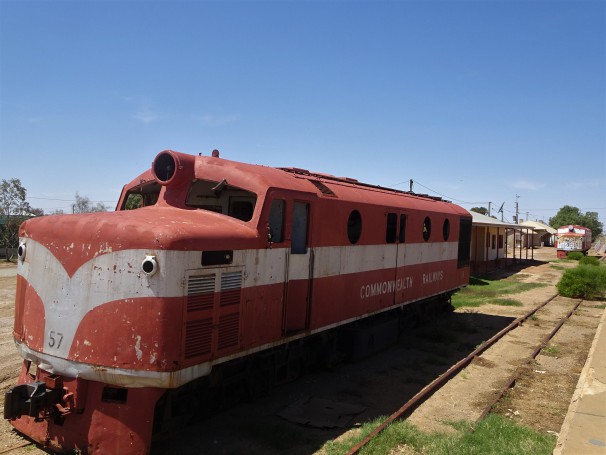
Marree railway station yards with a couple of old Commonwealth Railways engines form the old Ghan service.
Marree/Herrgott Springs.
These semi desert Aboriginal lands were first sighted by white men in 1840 when Edward John Eyre and his exploration party reached Lake Eyre. For some time people thought Lake Torrens and Lake Eyre was one big inland sea but explorations by Surveyor General George Goyder in 1860 proved that the lakes were separate. At that time Governor MacDonnell named the lake after Eyre (now Kati Thanda). It is about 90 kms from Marree. This area of SA is underpinned by deep artesian waters contained under great pressure and in some places they bubble to the surface forming springs. Salts and other minerals from the saline waters eventually create calcium walls around the springs as the water evaporates hence the term mound springs. When Sir Charles Todd was heading the construction of the Overland Telegraph in 1870- 1872 from Port Augusta to Darwin a camp was located at Herrgott Springs which was the first European name for the site of Marree. It was named after explorer John McDougall Stuart‘s botanist Joseph Herrgott who discovered a mound spring in 1859. There are over 5,000 mound springs in SA and they were vital to the construction of the Overland Telegraph.
The town emerged when the Great Northern Railway reached Herrgott Springs in 1884. Before the survey a hotel and a general store opened in 1882.From the beginning the locals and towns people called the place Marree but the government railway station was Herrgott Springs. The Police Station and Post Office opened in 1883 and the school in 1884. During World War One this German name was changed to Marree in line with previous local usage. By 1885 the town had the two storey Great Northern Hotel, two general stores, two butchers, three saddlers and an iron Wesleyan Methodist church and it had 600 residents. This church was used as the government school which was only built in 1908. The Post Office began in a tent until a building was erected in 1886 and it doubled as a repeater station for the Overland Telegraph. The Marree hospital opened in 1912. The railway was the focus of the early town and in 1891 there was a government survey to see if a railway line from Marree up the Birdsville was viable. Another survey was undertaken in 1916 but nothing eventuated. Supples went up and down to Birdsville by camel trains
Many Afghan cameleers were based at the springs as this was the starting point for camel trains to Birdsville, Oodnadatta and elsewhere. Around 1900 about 1,500 camels were based in Marree with 800 owned by just one Afghan. Although motor transport developed in the 1920s the Birdsville track cameleers were in Marree until 1949. Recently a replica Muslim mosque has been erected in the town to commemorate the role the Afghans played in servicing the Birdsville track. The first Mosque open by 1884 and was replaced twice before it closed. Its prayer rugs were sent to the Gilbert St. Mosque in Adelaide. Afghan names in Marree included Dervish, Moosha, Khan, Balook, Wahub, Dadih, Goolamdeen etc. Tom Kruse ran a truck mail service to Birdsville from 1936 to 1963 although the service continued until 1975 when an air service took over. 300 or so date palms were planted in Marree as a trial in 1884 but they did not thrive after about 30 years. The new standard gauge railway to Marree opened in 1957 employing about 85 men as the Ghan to Alice Springs changed gauge here from standard to the narrow 3’6” gauge. This railway closed in 1980 and the town has declined but tourism keeps it alive. Marree has a population of about 100 of which 60 % are men so it is a great place for women to find a partner! Marree Aboriginal School has two primary and one secondary class and six part time teachers. The town also has a Royal Flying Doctor service office, old Commonwealth Railway deserted train engines, and one of the trucks used by Tom Kruse from 1936.
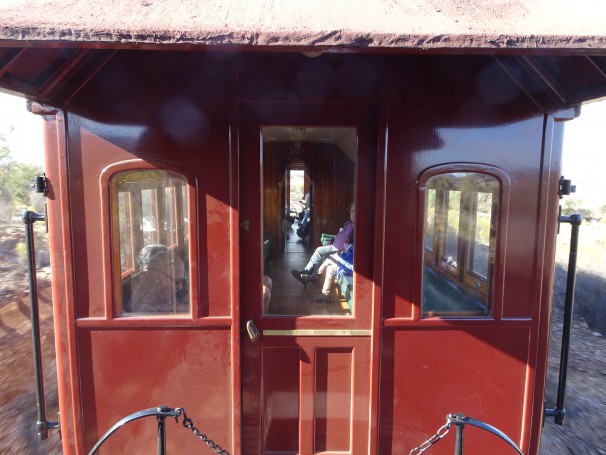
Quorn. Pichi Richi Railway. Old Ghan carriages on the tourist train through Pichi Richi Pass in the Flinders Ranges.
Hammond (also known as Heartbreak Plains.)
Hammond is a classic tale of a town established way beyond Goyder’s Line during the good seasons of the late 1870s and then its decline into a ghost town with perhaps only a hand full of permanent residents. Parts of Coonatto station were resumed by the government and the land surveyed and then sold at auction for farming from 1875 to form the Hundred of Coonatto. The town of Hammond was surveyed and established three years later in 1879 and named after one of Governor Jervois’ children Hammond( after William Hammond Wilmington Jervois) as was Amyton ( after Amy), Johnburg ( after John), Carrieton ( after Carrie) and also Wilmington. Hammond’s establishment was exceedingly fast and its decline exceedingly slow and painful. With the initial survey around 120 town allotment were offered for sale. A year later (1880) Hammond extension created more town blocks with two street blocks of around 60 town allotments near the new railway station making a total of nearly 200 town allotments. The railway line from Petersburg on its way to Quorn reached Hammond in late 1880 with the first through trains to Quorn in December 1881. The railway was crucial to Hammond’s growth and in 1889, for example, 200,000 bags of wheat were railed out of Hammond. Farmers carted their wheat in drays from Willowie, Amyton and Wilmington to the railway in Hammond.
The origins of the town go back to a time just before the 1879 survey. The Hammond Hotel was built and licensed from 1877. Jacka brothers who ran the brewery in Melrose opened the hotel with beer carted from their brewery. The hotel closed in 1972. Another early structure was the town Post Office built in 1880 with William Hudson as the first Post Master. Hudson appears to have soon given this up for the far more lucrative business of being a wheat agent/buyer. He was one of three main wheat buyers in Hammond throughout the 1880s and 1890s. The Police Station was another early structure as was the state school which opened in 1885 - as a provisional school. The fine stone building which still stands was built around 1895 when Hammond was no longer a provisional school. (For a few years Hammond also had a Catholic School.) Hammond School closed in 1969 with just 6 pupils. In its early years it had over 50 pupils a year. In its heyday Hammond had three stone churches. The first was the Wesleyan Methodist built in 1884. It closed in 1955 and was demolished. St Andrew’s Anglican Church began services in the Institute in 1884 and the church opened a few years later in 1892. It was recognised by the Anglican Synod in 1897. It closed in 1954. The Catholics held some early services in the Institute until their church was moved stone by stone and brick by bricks from near Wilmington to Hammond. In July 1907 Bishop Norton of Port Augusta diocese opened the church. In 1964 a later Bishop of Willochra was ordained in this church and the celebration event held afterwards in the Hammond Hall. Alas neither the church nor Institute are community buildings these days. The Hammond Catholic Church however was the last public building to close in Hammond and that only happened in 2006. In the early years Mrs Jacka’s Assembly rooms in the Hammond Hotel were used for public meetings and even church services. The Institute Hall was opened in 1884 in rented premises until their own building officially opened in April 1893. A Soldiers Memorial façade was added in 1922. A cottage hospital operated in Hammond from the early years as the town had a resident female doctor. The only other public facility that Hammond needed was a District Council and that was formed in 1893 and met in the newly opened Institute. The Council Offices were built behind the hotel in 1913. Hammond District Council was disbanded and amalgamated in 1933. By the late 1890s Hammond had over 100 residents (with about 600 in the Council District) and it was a thriving town despite the droughts of the early 1880s and early 1890s and the unsuitability of much of the country for farming. The community persisted despite the odds and Heartbreak Plains was an apt name but the community was far from dead.
Business was thriving in Hammond in the 1890s and it is doubtful that anyone then thought this thriving town would be a ghost town in the next century. Hammond had the hotel, two butcher shops, two saddlers, two boarding houses, two bootmakers, three general stores that employed over 20 people between them, a butter factory, three grain buyers, a blacksmith who made agricultural implements and buggies and employed 30 men, and to handle this business there was a Bank of Adelaide which opened in 1883. Growth continued into the 20th century and in the 1911 census Hammond had its greatest population with 319 residents but this fell to 109 in 1933 and only 68 in 1947. The number of occupied dwellings fell from 61 in 1911 to 10 in 1961. The rural population surrounding Hammond fell from 94 in 1933 to just 11 in 1947. The town had lost its rural hinterland and economic base.
How then did Hammond become a ghost town? Hammond died very slowly. It began with the closure of the Catholic School in the early 20th century and a big decline in population in the early 1900s. The Police Station was closed by 1904 and the Post Office became a non-official Post Office in 1917 with no mail services at all after 1988. Hammond blacksmith business was sold and presumably closed in 1912. About two third of the population left the town during the 1920s. Another major period of decline was the 1960s. The Railway Station was downgraded to an unattended station in 1930 and from 1937 the Transcontinental Train to Perth no longer passed through the town and the rail service was quite limited. In 1933 the District Council was abolished and the Offices closed. The bank of Adelaide closed in 1939. During World War Two it was used as the office for issuing ration books and as a polling booth for federal elections. Then the churches began to close. The Anglican Church closed in 1954 followed by the Methodist Church the next year. The last general store was still operating when the churches closed but it probably closed when the school and hotel closed. Enrolments at the school began a decline from 1914 onwards with the biggest falls in student numbers from 1942 and by the early 1950s the school usually had around 12 enrolments. The school closed in 1969. Just three years later the hotel closed and the town was almost dead. The last passenger trains used the railway station and line in 1969. Goods trains ceased in 1987.Then in 1999 the District Council of Mt Remarkable sold off properties and buildings that had been abandoned by their owners. Some were purchased for use as weekenders but by then most property had already been demolished or was beyond repair. The noted artist Charles Bannon, father of Premier John Bannon had a property in Hammond for many years and Charles Bannon is buried in the Hammond cemetery.
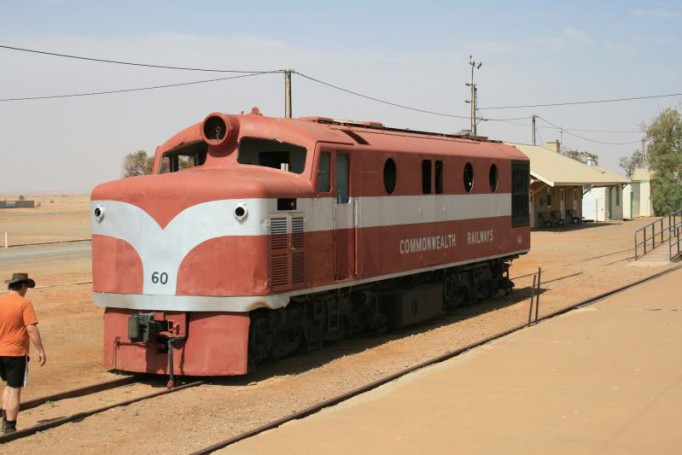
Marree, Old Ghan Engine
3479890676_4cb5bed1cb_c
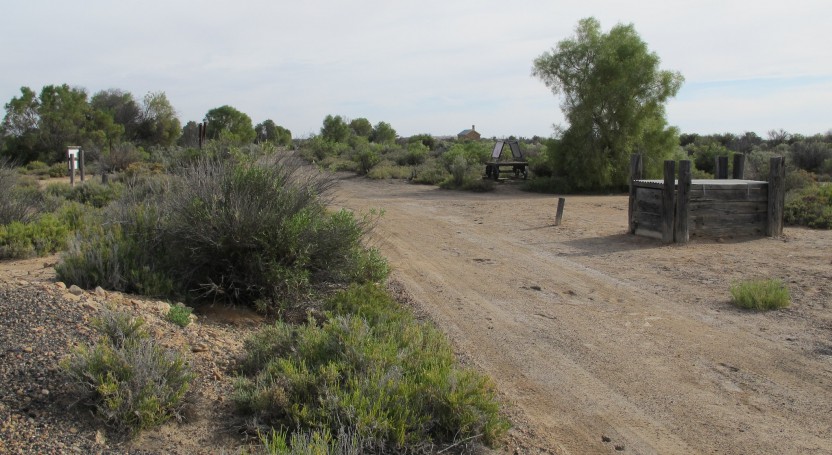
The Old Ghan railway from Marree to Alice
See Youtube for several videos on the Ghan..
youtu.be/iP_WtGbvEfY
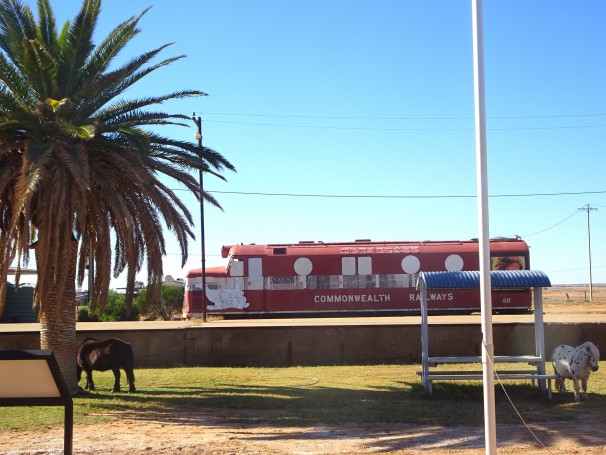
Marree. The Commonwealth Railways railway station where the old Ghan began to Alice Springs.
Marree/Herrgott Springs. Population 65. These semi desert Aboriginal lands were first sighted by white men in 1840 when Edward John Eyre and his exploration party reached Lake Eyre. For some time people thought Lake Torrens and Lake Eyre was one big inland sea but explorations by Surveyor General George Goyder in 1860 proved that the lakes were separate. At that time Governor MacDonnell named the lake after explorer Eyre (now Kati Thanda). It is about 90 kms from Marree. This area of SA is underpinned by deep artesian waters contained under great pressure and in some places they bubble to the surface forming springs. Salts and other minerals from the saline waters eventually create calcium walls around the springs as the water evaporates hence the term mound springs. When Sir Charles Todd was heading the construction of the Overland Telegraph in 1870- 1872 from Port Augusta to Darwin a camp was located at Herrgott Springs which was the first European name for the site of Marree. It was named after explorer John McDougall Stuart‘s botanist Joseph Herrgott who discovered a mound spring in 1859. There are over 5,000 mound springs in SA and they were vital to the construction of the Overland Telegraph.
The town emerged when the Great Northern Railway reached Herrgott Springs in 1884. Before the survey a hotel and a general store opened in 1882.From the beginning the locals and towns people called the place Marree but the government railway station was Herrgott Springs. The Police Station and Post Office opened in 1883 and the school in 1884. During World War One this German name was changed to Marree in line with previous local usage. By 1885 the town had the two storey Great Northern Hotel, two general stores, two butchers, three saddlers and an iron Wesleyan Methodist church and it had 600 residents. This church was used as the government school which was only built in 1908. The Post Office began in a tent until a building was erected in 1886 and it doubled as a repeater station for the Overland Telegraph. The Marree hospital opened in 1912. The railway was the focus of the early town and in 1891 there was a government survey to see if a railway line from Marree up the Birdsville was viable. Another survey was undertaken in 1916 but nothing eventuated. Supplies went up and down to Birdsville by camel trains
Many Afghan cameleers were based at the springs as this was the starting point for camel trains to Birdsville, Oodnadatta and elsewhere. Around 1900 about 1,500 camels were based in Marree with 800 owned by just one Afghan. Although motor transport developed in the 1920s the Birdsville track cameleers were in Marree until 1949. Recently a replica Muslim mosque has been erected in the town to commemorate the role the Afghans played in servicing the Birdsville track. The first Mosque open by 1884 and was replaced twice before it closed. Its prayer rugs were sent to the Gilbert St. Mosque in Adelaide. Afghan names in Marree included Dervish, Moosha, Khan, Balook, Wahub, Dadih, Goolamdeen etc. Tom Kruse ran a truck mail service to Birdsville from 1936 to 1963 although the service continued until 1975 when an air service took over. 300 or so date palms were planted in Marree as a trial in 1884 but they did not thrive after about 30 years. The new standard gauge railway to Marree opened in 1957 employing about 85 men as the Ghan to Alice Springs changed gauge here from standard to the narrow 3’6” gauge. This railway closed in 1980 and the town has declined but tourism keeps it alive. Marree has a population of about 100 of which 60 % are men so it is a great place for women to find a partner! Marree Aboriginal School has two primary and one secondary class and six part time teachers. The town also has a Royal Flying Doctor service office, old Commonwealth Railway deserted train engines, and one of the trucks used by Tom Kruse from 1936. When the railway reached Marree in 1884 the town grew and by around the turn of the century the railway divided the town racially with the Europeans on the side with the hotel, the school, the Police Station and the Afghan cameleers and the Djeri Aboriginals on the other side. This is no longer the case as the Afghan cameleers are gone and few Europeans live in Maree these days.
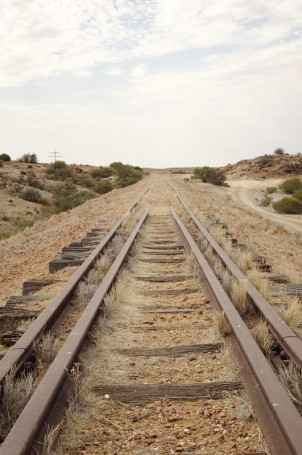
The largrest Old Ghan Rail Bridge
8035030253_2701fef906_c
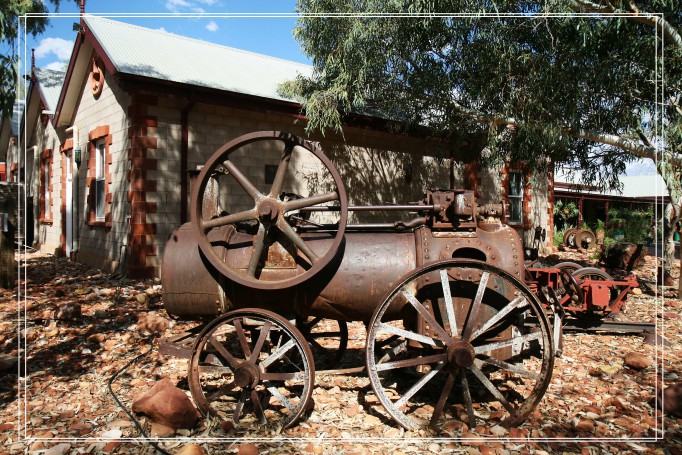
25-old ghan train station
10084512094_8df8a0cefc_k
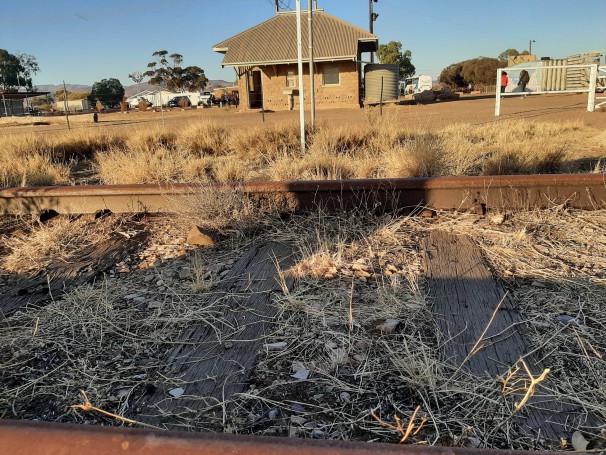
Parachilna. The 1956 built railway station used by the Old Ghan from Adelaide to Alice Springs.
Parachilna. Population 15.Surprisingly the town, of just 24 blocks, was surveyed in 1863 near a waterhole before there was even widespread pastoral lease holders in the Flinders Ranges but it was an important stopping point on the route from Port Augusta to the Blinman copper mines. The government well was there to provide water for pastoralists and stock drovers wanting to get to the Northern Flinders or Gammon. But more significant was the fact that the town provided access to the copper mines at Blinman which were discovered in 1859. Parachilna Gorge provided a shorter route through fewer hills to get to Blinman than other routes. More survey work was done around Parachilna in 1873 and small leaseholds were offered for sale. The Hundred of Nilpena was declared in 1877 yet no development occurred. Things changed when the great northern railway came here in 1882 on its route to Farina. The line was built a few kilometres to the west and so the government settlement of Parachilna followed market forces and moved west as well. The Parachilna siding was built in 1881 in anticipation of the railway. The Prairie Hotel moved near the siding around 1882 and the current stone hotel was built in 1905. A Post Office followed and in 1890 the government surveyed a second town of Parachilna. It never grew and the main building left today is the Parachilna Prairie Hotel known for its Flinders feral food menu (camel, goat, kangaroo and emu), its Aboriginal art gallery, Flinders foods and coffee in the hotel bar. The hotel also has some Ediacaran fossils displays of early jellyfish like organisms which emerged about 540 to 555 million years ago. These Nilpena fossils are the first known multi-organisms on earth and are of international importance and significance. The publicans own and run Nilpena Station to the west of the settlement. Near the hotel are the heritage listed Parachilna fettlers cottages and the sculpture garden of some Ediacaran fossils. At one time the town had a general store and a school from the early 20th century. It closed a few years ago.
Up in the Flinders Ranges behind the hotel is Edeowie Gorge with its Edeowie natural glass. This slag-like opaque rock or lechatelierite is found in clay baked layers which have been subjected to mineralization and oxidation. In Parachilna Gorge east of the town some land was donated to the Soldiers’ T.B. Aid Society to establish a tuberculosis sanatorium in the pristine air there. Partly due to the efforts of Ella Cleggett the Angorichina hostel opened in 1927 and treated patients until 1973. It is now a hostel for travellers. Also east of Parachilna in the Brachina Gorge is where the Ediacaran fossils were found in quartzite rocks. These marine animals occurred within the strata and are the oldest evidence of living organisms on earth. Stromatolites made up of mats of algae are the oldest forms of life but they had no bone structure or sexual reproduction. But it was these marine organisms that led to the formation of the Ediacara fauna or fossil animals which are the oldest creatures on earth. They emerged about 600 million years ago. Once stranded in pools they were fossilised into the rocks. These organisms include jellyfish, worms and other soft bodied marine creatures that differ from the algae in stromatolites because they have soft bone like structures which give them a defined shape. These multicellular organisms were the first on earth to have sexual reproduction. The rocks in which the fossils were preserved are about 600 million years old. SA declared the Ediacara Conservation Park in 2007 although the fossils were discovered decades before by Reg Sprigg and documented in 1946. Also in 2007 the fossil site was added to the Australian National Heritage List. Many specimens of these world important fossils are held in the SA Museum collections. There are other sites around the world with Ediacara fossils, using this same name, from North and South America, Africa, Europe and Asia. These fossils had to be protected because there is an international market for the sale of these rare fossils and many were stolen from this region for commercial profit before 2007.
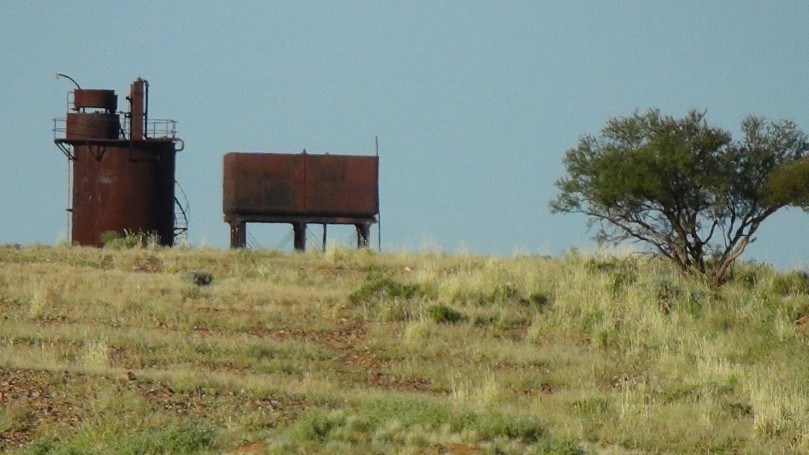
Old Ghan tanks from the road
51013802953_416dee2cb3_k
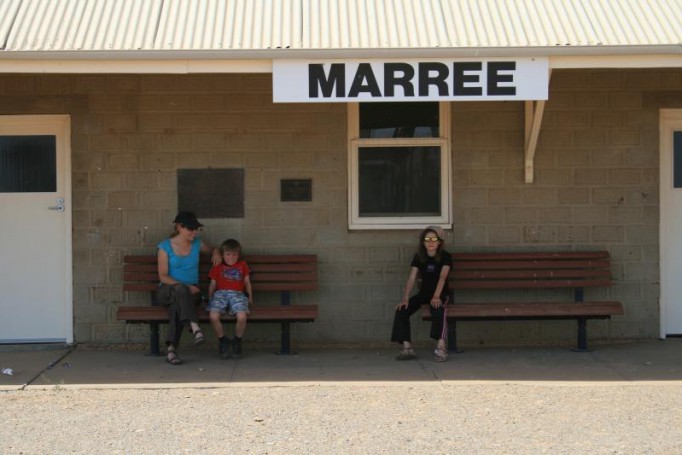
Marree, Old Ghan Station
3479891980_68b3dd552d_c
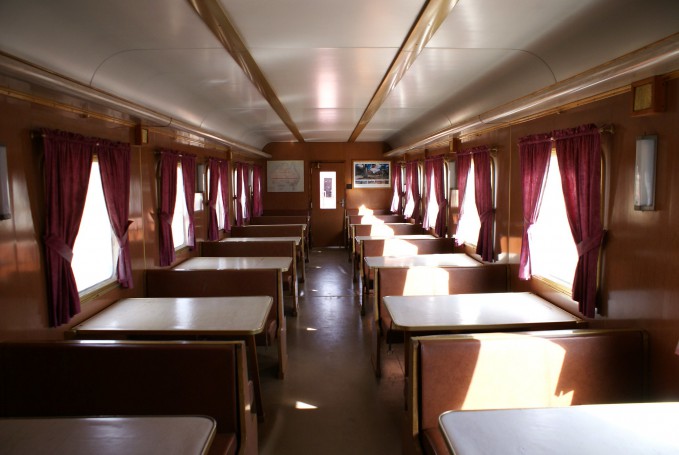
Old Ghan Dining Car
July 2009
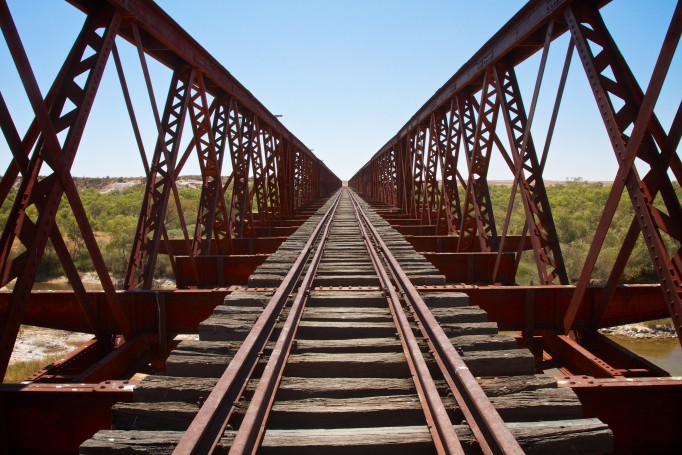
Algebuckina Bridge
Algebuckina Bridge is probably THE outback railway bridge. Located close to the Oodnadatta track it is a remainder of the Old Ghan railway and with 578m the longest span bridge on the Old Ghan.
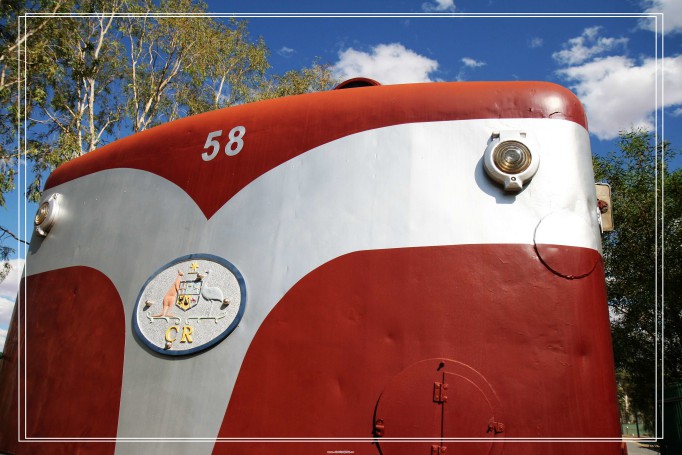
29-old ghan train station
10084503254_06d102c2ae_k
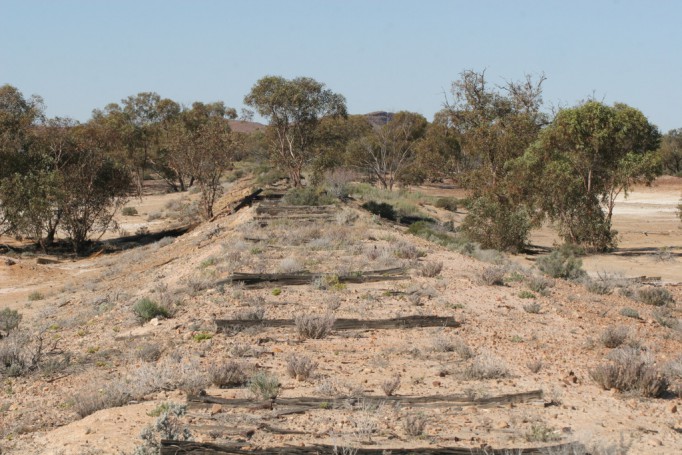
Oodnadatta Track
Old Ghan ralway line
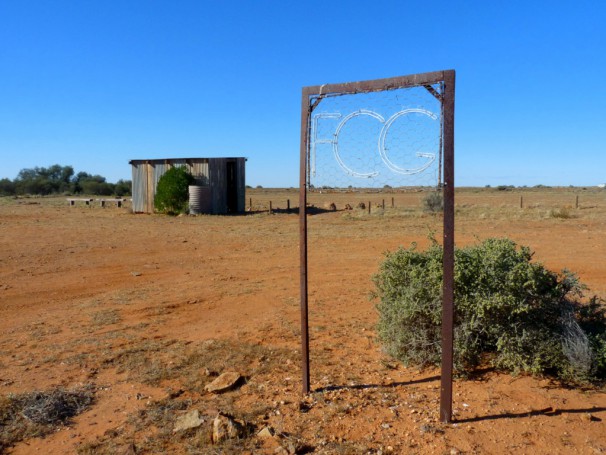
Farina Cricket Club
Old Ghan railway line
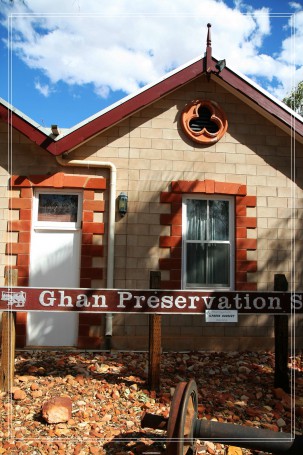
24-old ghan train station
10084566285_aa6849c3a2_k

 English