Waterfall in the mist
Deep in the Tasmanian Forests - Used a handheld ND filter to get a longer exposure.

Work as art #2, Dark Mofo, Dark Park, Hobart
Project bodystorm, by the Brazilian art collective Grupo EmpreZa.

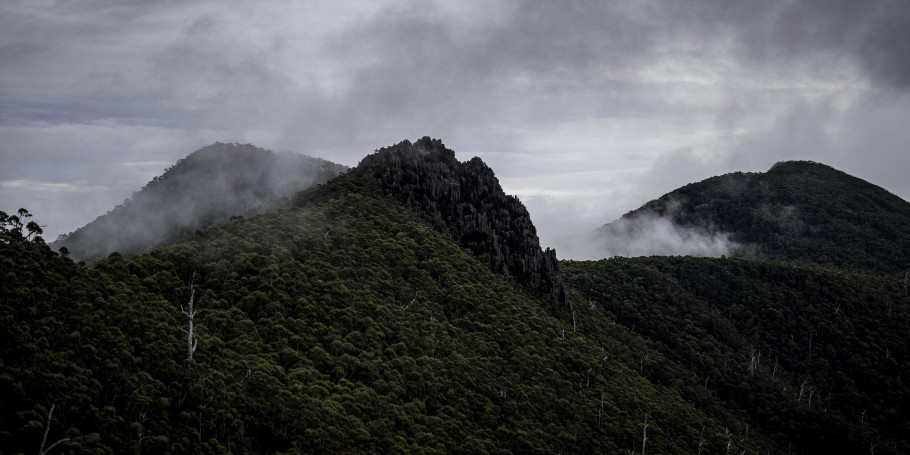
Clouds over the mountains, Cathedral Rock track, Wellington Park, Tasmania-9
50194030978_4e60f66039_k

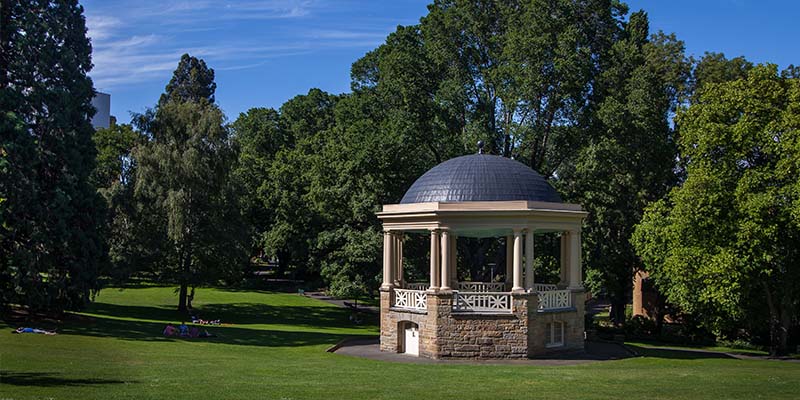
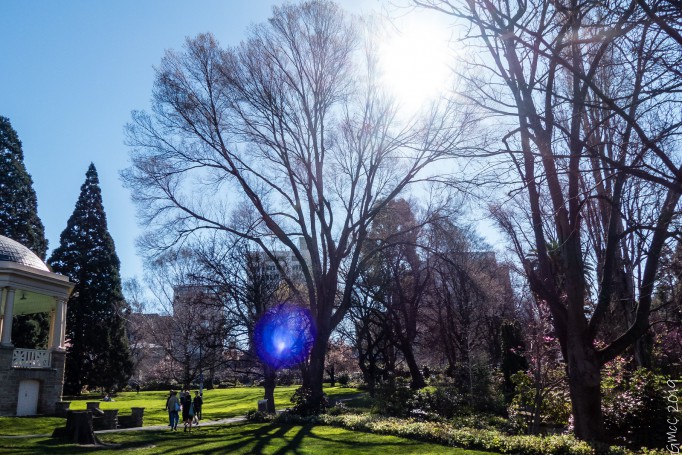
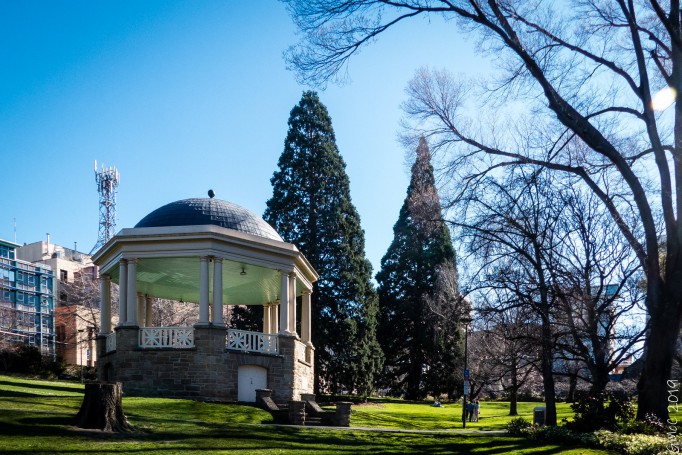
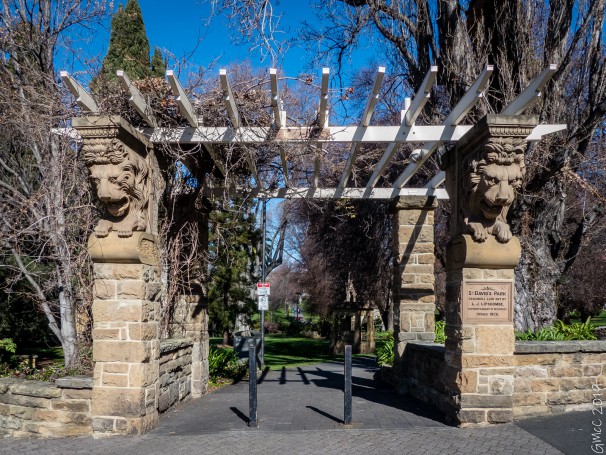
St Davids Park, Hobart, Tasmania
52177085335_b53b62c6de_k

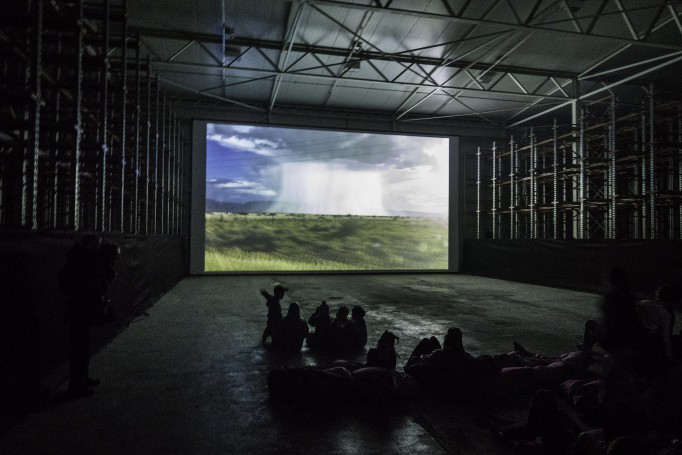
United Visual Artists, “Musical Universalis”. Dark Park, Dark Mofo 2018, Hobart-44
29940478448_aac8cb95e0_k

hi, St Davids Park, Hobart, Tasmania
52175570297_fe94682b61_k

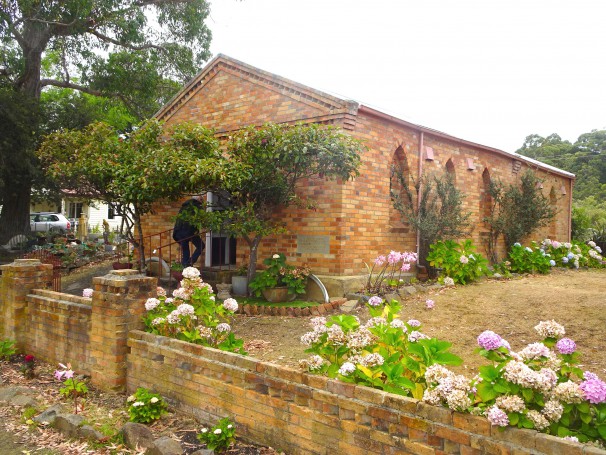
Bruny Island. The Bligh Museum at Adventure Bay. Built in 1984 from early 19th C convict made bricks. Dedicated to Pacific Ocean explorers.
Bruny Island.
This rugged, and in places pristine island, saw many explorers come and go before the penal settlement on Van Diemen’s Land began in 1804. The first white explorer was Abel Tasman in 1642 followed by Tobias
Furneaux 1773 ( he named Adventure Bay after his boat), James Cook 1777 , William Bligh in 1788 and with Matthew Flinders in 1792. French explorer Bruni D’Entrecasteaux also visited in 1792 and named the channel beside the mainland after himself and the island was named Bruni, later changed to Bruny. He charted part of South Australia too and there is a D’Entrecasteaux Reef near Fowlers Bay. Next came Nicholas Baudin to Bruny Island in 1802. By that time sealers, mainly Americans, were partially settled on Bruny Island and the large scale kidnapping and sexual exploitation of the Nuenonne women began.
Large areas of the island are National Parks providing habitat for several endangered bird species and geographically north and south Bruny are quite different. North Bruny is more undulating with large areas of cleared land for agriculture whilst South Bruny is more rugged with 200 metre high cliffs facing the ocean, less cleared areas and a lighthouse to guide shipping on its southern tip. The two islands are connected by an isthmus or tombola which is called The Neck. As with most areas of Bruny The Neck was a significance place to the Nuenonne Aboriginal people who occupied the island before white settlement. The most prominent full blood Aboriginal person in Tasmania, and sadly the last of her people to die in 1876, was Truganini who was born on South Bruny in 1812. The first white settlement on Bruny happened in 1818 when James Kelly was given authority to have assigned convicts on the island’s northern tip to grow vegetables and fruit for Hobart. He later established a whaling station on South Bruny. As he was situated at the entry to the Derwent River he became the harbourmaster for Hobart. He was buried in St David’s Park Hobart. The government also sent convicts in the 1820s to South Bruny to gather salt, fell timber and burn lime for the building trade. Then in 1829 the Nuenonne occupation was restricted when the government granted free to Richard Pybus almost 2,600 acres in the north and middle section of Bruny and shortly afterwards a further land grant to George Augustus Robertson a self-styled amateur missionary who received about 500 acres. Pybus was later granted another free 2,300 acres on South Bruny which was only exploited for its timber, not farming. More white settlers followed. Cape Bruny lighthouse was operational in 1838 and only automated in 1993. Ferry services to Bruny Island began around 1900. Image above by Martin Boyce.
The life story of Truganini is amazing and impressive. In 1828 when the Lieutenant Governor of VDL Sir George Arthur decided to expel all Aboriginals from the central settled districts. That edict affected Truganini. In 1829 she was one of about 12 Aboriginal people that George Robertson brought into to his mission and she spent the next 12 years under his control. She joined him in a series of exhausting walks around Tasmania including the rugged and isolated west coast trying to round up any remaining Aboriginal people for their removal to one of the islands of Bass Strait. During one of these arduous trips Truganini saved Robertson’s life when he nearly drowned in a
river. She remained loyal to Robertson throughout this period as did the male Aboriginals who trekked with him. This was the follow up from the failure of the Black Line of 1830. In 1835 Robertson declared all Aboriginal people had been rounded up. Initially they were taken, including Truganini, to Swan Island near the north coast but soon they were moved to Cape Barren Island and finally to Flinders Island. With government approval Robertson set up a mission there for the remaining Aboriginal people of Tasmania. Sadly influenza and syphilis drastically reduced their numbers in a few years. Despite the mission Truganini and others were able to escape to join up with sealers if they wished or to hunt and gather as they had in their homelands. Truganini had dozens of sexual partners in her life time and four husbands but she never had children of her own. Like most of the people on Flinders Island she felt betrayed as many had agreed to being rounded up on the belief they would eventually able to return to their own country. This never happened. In 1841 Robertson left Wybalenna mission and went to be the Aboriginal Protector in the Port Phillip Bay district. He took Truganini and several other loyal Aboriginal supporters with him. Truganini hated the Melbourne settlement and ran away many times. At one stage she faced charges associated with a murder but she and the other women involved were all acquitted with no charge to face. Thus in 1842 Truganini is returned to Wybalenna station on Flinders Island. But in 1847 the remaining 47 Aborigines at Wybalenna were transferred to a new mission station at Oyster Cove near Kettering and Bruny Island. This was a wonderful moved for Truganini as it was back in her ancestral lands. As the number of Tasmanian Aboriginals declined through mortality and disease some scientists became very interested in the skulls and sometimes other body parts of the last of the race. Truganini became a “show piece” and was sometimes paraded through the streets of Hobart in a fine silk gown. She was introduced to the Duke of Edinburgh when he visited Hobart in 1868. She was photographed for posterity in 1866 and by others unofficially. When Truganini was the last Aboriginal person alive at Oyster Cove she was moved to Hobart and the mission site closed in 1873. She died in Hobart 1876. She was secretly buried in the former Cascades Female Factory which was then a female prison. She had extracted an agreement from her keepers before her death that her remains would not be publically displayed but in 1878 her body was exhumed and given to the Royal Society of Tasmania. Then in 1888 her skeleton was removed and taken to the Melbourne International Exposition. In Melbourne a cast was made of her skeleton which was displayed in the Museum of Victoria until 1969. In 1904 another a cast of her skull with an articulated skeleton was given by the Museum of Victoria to the Museum of Natural History in New York. Her actual skeleton was displayed in the Tasmanian Museum and Art Gallery from 1904 to 1947. In the centenary year of her death 1976, after a long legal battle, her remains were returned to the Tasmanian Aboriginal Centre. The remains were cremated and scattered in D’Entrecasteaux Straits as promised to Truganini in 1876. Her image as the last of her race has been sent around the world and the best known authentic portrait was painted by former convict artist Thomas Bock in 1835. It is owned by the British Museum and it depicts Truganini wearing a shell necklace. Above is another painting of Truganini by Benjamin Duterrau.

Bruny Island.Small rock islands off the southern coast in the Southern Ocean.
Bruny Island.
This rugged, and in places pristine island, saw many explorers come and go before the penal settlement on Van Diemen’s Land began in 1804. The first white explorer was Abel Tasman in 1642 followed by Tobias
Furneaux 1773 ( he named Adventure Bay after his boat), James Cook 1777 , William Bligh in 1788 and with Matthew Flinders in 1792. French explorer Bruni D’Entrecasteaux also visited in 1792 and named the channel beside the mainland after himself and the island was named Bruni, later changed to Bruny. He charted part of South Australia too and there is a D’Entrecasteaux Reef near Fowlers Bay. Next came Nicholas Baudin to Bruny Island in 1802. By that time sealers, mainly Americans, were partially settled on Bruny Island and the large scale kidnapping and sexual exploitation of the Nuenonne women began.
Large areas of the island are National Parks providing habitat for several endangered bird species and geographically north and south Bruny are quite different. North Bruny is more undulating with large areas of cleared land for agriculture whilst South Bruny is more rugged with 200 metre high cliffs facing the ocean, less cleared areas and a lighthouse to guide shipping on its southern tip. The two islands are connected by an isthmus or tombola which is called The Neck. As with most areas of Bruny The Neck was a significance place to the Nuenonne Aboriginal people who occupied the island before white settlement. The most prominent full blood Aboriginal person in Tasmania, and sadly the last of her people to die in 1876, was Truganini who was born on South Bruny in 1812. The first white settlement on Bruny happened in 1818 when James Kelly was given authority to have assigned convicts on the island’s northern tip to grow vegetables and fruit for Hobart. He later established a whaling station on South Bruny. As he was situated at the entry to the Derwent River he became the harbourmaster for Hobart. He was buried in St David’s Park Hobart. The government also sent convicts in the 1820s to South Bruny to gather salt, fell timber and burn lime for the building trade. Then in 1829 the Nuenonne occupation was restricted when the government granted free to Richard Pybus almost 2,600 acres in the north and middle section of Bruny and shortly afterwards a further land grant to George Augustus Robertson a self-styled amateur missionary who received about 500 acres. Pybus was later granted another free 2,300 acres on South Bruny which was only exploited for its timber, not farming. More white settlers followed. Cape Bruny lighthouse was operational in 1838 and only automated in 1993. Ferry services to Bruny Island began around 1900. Image above by Martin Boyce.
The life story of Truganini is amazing and impressive. In 1828 when the Lieutenant Governor of VDL Sir George Arthur decided to expel all Aboriginals from the central settled districts. That edict affected Truganini. In 1829 she was one of about 12 Aboriginal people that George Robertson brought into to his mission and she spent the next 12 years under his control. She joined him in a series of exhausting walks around Tasmania including the rugged and isolated west coast trying to round up any remaining Aboriginal people for their removal to one of the islands of Bass Strait. During one of these arduous trips Truganini saved Robertson’s life when he nearly drowned in a
river. She remained loyal to Robertson throughout this period as did the male Aboriginals who trekked with him. This was the follow up from the failure of the Black Line of 1830. In 1835 Robertson declared all Aboriginal people had been rounded up. Initially they were taken, including Truganini, to Swan Island near the north coast but soon they were moved to Cape Barren Island and finally to Flinders Island. With government approval Robertson set up a mission there for the remaining Aboriginal people of Tasmania. Sadly influenza and syphilis drastically reduced their numbers in a few years. Despite the mission Truganini and others were able to escape to join up with sealers if they wished or to hunt and gather as they had in their homelands. Truganini had dozens of sexual partners in her life time and four husbands but she never had children of her own. Like most of the people on Flinders Island she felt betrayed as many had agreed to being rounded up on the belief they would eventually able to return to their own country. This never happened. In 1841 Robertson left Wybalenna mission and went to be the Aboriginal Protector in the Port Phillip Bay district. He took Truganini and several other loyal Aboriginal supporters with him. Truganini hated the Melbourne settlement and ran away many times. At one stage she faced charges associated with a murder but she and the other women involved were all acquitted with no charge to face. Thus in 1842 Truganini is returned to Wybalenna station on Flinders Island. But in 1847 the remaining 47 Aborigines at Wybalenna were transferred to a new mission station at Oyster Cove near Kettering and Bruny Island. This was a wonderful moved for Truganini as it was back in her ancestral lands. As the number of Tasmanian Aboriginals declined through mortality and disease some scientists became very interested in the skulls and sometimes other body parts of the last of the race. Truganini became a “show piece” and was sometimes paraded through the streets of Hobart in a fine silk gown. She was introduced to the Duke of Edinburgh when he visited Hobart in 1868. She was photographed for posterity in 1866 and by others unofficially. When Truganini was the last Aboriginal person alive at Oyster Cove she was moved to Hobart and the mission site closed in 1873. She died in Hobart 1876. She was secretly buried in the former Cascades Female Factory which was then a female prison. She had extracted an agreement from her keepers before her death that her remains would not be publically displayed but in 1878 her body was exhumed and given to the Royal Society of Tasmania. Then in 1888 her skeleton was removed and taken to the Melbourne International Exposition. In Melbourne a cast was made of her skeleton which was displayed in the Museum of Victoria until 1969. In 1904 another a cast of her skull with an articulated skeleton was given by the Museum of Victoria to the Museum of Natural History in New York. Her actual skeleton was displayed in the Tasmanian Museum and Art Gallery from 1904 to 1947. In the centenary year of her death 1976, after a long legal battle, her remains were returned to the Tasmanian Aboriginal Centre. The remains were cremated and scattered in D’Entrecasteaux Straits as promised to Truganini in 1876. Her image as the last of her race has been sent around the world and the best known authentic portrait was painted by former convict artist Thomas Bock in 1835. It is owned by the British Museum and it depicts Truganini wearing a shell necklace. Above is another painting of Truganini by Benjamin Duterrau.

Tasmania. The southern coast of Bruny Island facing the Southern Ocean.
Bruny Island.
This rugged, and in places pristine island, saw many explorers come and go before the penal settlement on Van Diemen’s Land began in 1804. The first white explorer was Abel Tasman in 1642 followed by Tobias
Furneaux 1773 ( he named Adventure Bay after his boat), James Cook 1777 , William Bligh in 1788 and with Matthew Flinders in 1792. French explorer Bruni D’Entrecasteaux also visited in 1792 and named the channel beside the mainland after himself and the island was named Bruni, later changed to Bruny. He charted part of South Australia too and there is a D’Entrecasteaux Reef near Fowlers Bay. Next came Nicholas Baudin to Bruny Island in 1802. By that time sealers, mainly Americans, were partially settled on Bruny Island and the large scale kidnapping and sexual exploitation of the Nuenonne women began.
Large areas of the island are National Parks providing habitat for several endangered bird species and geographically north and south Bruny are quite different. North Bruny is more undulating with large areas of cleared land for agriculture whilst South Bruny is more rugged with 200 metre high cliffs facing the ocean, less cleared areas and a lighthouse to guide shipping on its southern tip. The two islands are connected by an isthmus or tombola which is called The Neck. As with most areas of Bruny The Neck was a significance place to the Nuenonne Aboriginal people who occupied the island before white settlement. The most prominent full blood Aboriginal person in Tasmania, and sadly the last of her people to die in 1876, was Truganini who was born on South Bruny in 1812. The first white settlement on Bruny happened in 1818 when James Kelly was given authority to have assigned convicts on the island’s northern tip to grow vegetables and fruit for Hobart. He later established a whaling station on South Bruny. As he was situated at the entry to the Derwent River he became the harbourmaster for Hobart. He was buried in St David’s Park Hobart. The government also sent convicts in the 1820s to South Bruny to gather salt, fell timber and burn lime for the building trade. Then in 1829 the Nuenonne occupation was restricted when the government granted free to Richard Pybus almost 2,600 acres in the north and middle section of Bruny and shortly afterwards a further land grant to George Augustus Robertson a self-styled amateur missionary who received about 500 acres. Pybus was later granted another free 2,300 acres on South Bruny which was only exploited for its timber, not farming. More white settlers followed. Cape Bruny lighthouse was operational in 1838 and only automated in 1993. Ferry services to Bruny Island began around 1900.

Tasmania. The rugged southern coast of Bruny Island.
Bruny Island.
This rugged, and in places pristine island, saw many explorers come and go before the penal settlement on Van Diemen’s Land began in 1804. The first white explorer was Abel Tasman in 1642 followed by Tobias
Furneaux 1773 ( he named Adventure Bay after his boat), James Cook 1777 , William Bligh in 1788 and with Matthew Flinders in 1792. French explorer Bruni D’Entrecasteaux also visited in 1792 and named the channel beside the mainland after himself and the island was named Bruni, later changed to Bruny. He charted part of South Australia too and there is a D’Entrecasteaux Reef near Fowlers Bay. Next came Nicholas Baudin to Bruny Island in 1802. By that time sealers, mainly Americans, were partially settled on Bruny Island and the large scale kidnapping and sexual exploitation of the Nuenonne women began.
Large areas of the island are National Parks providing habitat for several endangered bird species and geographically north and south Bruny are quite different. North Bruny is more undulating with large areas of cleared land for agriculture whilst South Bruny is more rugged with 200 metre high cliffs facing the ocean, less cleared areas and a lighthouse to guide shipping on its southern tip. The two islands are connected by an isthmus or tombola which is called The Neck. As with most areas of Bruny The Neck was a significance place to the Nuenonne Aboriginal people who occupied the island before white settlement. The most prominent full blood Aboriginal person in Tasmania, and sadly the last of her people to die in 1876, was Truganini who was born on South Bruny in 1812. The first white settlement on Bruny happened in 1818 when James Kelly was given authority to have assigned convicts on the island’s northern tip to grow vegetables and fruit for Hobart. He later established a whaling station on South Bruny. As he was situated at the entry to the Derwent River he became the harbourmaster for Hobart. He was buried in St David’s Park Hobart. The government also sent convicts in the 1820s to South Bruny to gather salt, fell timber and burn lime for the building trade. Then in 1829 the Nuenonne occupation was restricted when the government granted free to Richard Pybus almost 2,600 acres in the north and middle section of Bruny and shortly afterwards a further land grant to George Augustus Robertson a self-styled amateur missionary who received about 500 acres. Pybus was later granted another free 2,300 acres on South Bruny which was only exploited for its timber, not farming. More white settlers followed. Cape Bruny lighthouse was operational in 1838 and only automated in 1993. Ferry services to Bruny Island began around 1900.

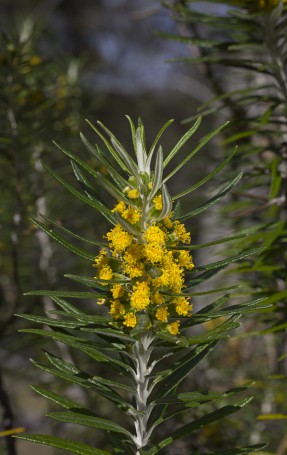
Bedfordia linearis (iv)
Bedfordia linearis (slender blanketleaf) flowering in Ridgeway Park, Hobart, Tasmania.

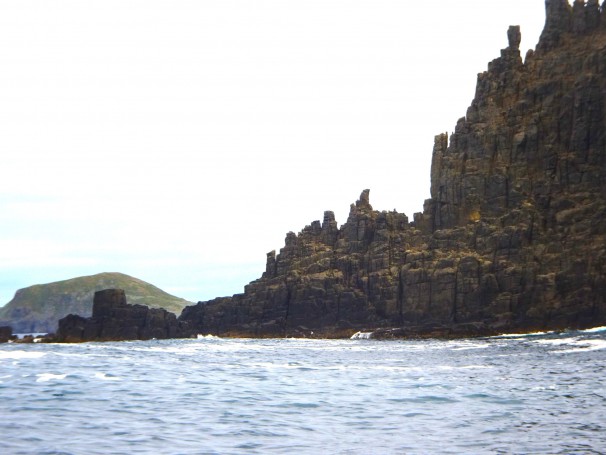
Tasmania. The rugged southern coast of Bruny Island. Cliffs and little offshore islands.
Bruny Island.
This rugged, and in places pristine island, saw many explorers come and go before the penal settlement on Van Diemen’s Land began in 1804. The first white explorer was Abel Tasman in 1642 followed by Tobias
Furneaux 1773 ( he named Adventure Bay after his boat), James Cook 1777 , William Bligh in 1788 and with Matthew Flinders in 1792. French explorer Bruni D’Entrecasteaux also visited in 1792 and named the channel beside the mainland after himself and the island was named Bruni, later changed to Bruny. He charted part of South Australia too and there is a D’Entrecasteaux Reef near Fowlers Bay. Next came Nicholas Baudin to Bruny Island in 1802. By that time sealers, mainly Americans, were partially settled on Bruny Island and the large scale kidnapping and sexual exploitation of the Nuenonne women began.
Large areas of the island are National Parks providing habitat for several endangered bird species and geographically north and south Bruny are quite different. North Bruny is more undulating with large areas of cleared land for agriculture whilst South Bruny is more rugged with 200 metre high cliffs facing the ocean, less cleared areas and a lighthouse to guide shipping on its southern tip. The two islands are connected by an isthmus or tombola which is called The Neck. As with most areas of Bruny The Neck was a significance place to the Nuenonne Aboriginal people who occupied the island before white settlement. The most prominent full blood Aboriginal person in Tasmania, and sadly the last of her people to die in 1876, was Truganini who was born on South Bruny in 1812. The first white settlement on Bruny happened in 1818 when James Kelly was given authority to have assigned convicts on the island’s northern tip to grow vegetables and fruit for Hobart. He later established a whaling station on South Bruny. As he was situated at the entry to the Derwent River he became the harbourmaster for Hobart. He was buried in St David’s Park Hobart. The government also sent convicts in the 1820s to South Bruny to gather salt, fell timber and burn lime for the building trade. Then in 1829 the Nuenonne occupation was restricted when the government granted free to Richard Pybus almost 2,600 acres in the north and middle section of Bruny and shortly afterwards a further land grant to George Augustus Robertson a self-styled amateur missionary who received about 500 acres. Pybus was later granted another free 2,300 acres on South Bruny which was only exploited for its timber, not farming. More white settlers followed. Cape Bruny lighthouse was operational in 1838 and only automated in 1993. Ferry services to Bruny Island began around 1900.

Bruny Island. Adventure Bay wilderness sea cruise to the south coast of Bruny Island.
Bruny Island.
This rugged, and in places pristine island, saw many explorers come and go before the penal settlement on Van Diemen’s Land began in 1804. The first white explorer was Abel Tasman in 1642 followed by Tobias
Furneaux 1773 ( he named Adventure Bay after his boat), James Cook 1777 , William Bligh in 1788 and with Matthew Flinders in 1792. French explorer Bruni D’Entrecasteaux also visited in 1792 and named the channel beside the mainland after himself and the island was named Bruni, later changed to Bruny. He charted part of South Australia too and there is a D’Entrecasteaux Reef near Fowlers Bay. Next came Nicholas Baudin to Bruny Island in 1802. By that time sealers, mainly Americans, were partially settled on Bruny Island and the large scale kidnapping and sexual exploitation of the Nuenonne women began.
Large areas of the island are National Parks providing habitat for several endangered bird species and geographically north and south Bruny are quite different. North Bruny is more undulating with large areas of cleared land for agriculture whilst South Bruny is more rugged with 200 metre high cliffs facing the ocean, less cleared areas and a lighthouse to guide shipping on its southern tip. The two islands are connected by an isthmus or tombola which is called The Neck. As with most areas of Bruny The Neck was a significance place to the Nuenonne Aboriginal people who occupied the island before white settlement. The most prominent full blood Aboriginal person in Tasmania, and sadly the last of her people to die in 1876, was Truganini who was born on South Bruny in 1812. The first white settlement on Bruny happened in 1818 when James Kelly was given authority to have assigned convicts on the island’s northern tip to grow vegetables and fruit for Hobart. He later established a whaling station on South Bruny. As he was situated at the entry to the Derwent River he became the harbourmaster for Hobart. He was buried in St David’s Park Hobart. The government also sent convicts in the 1820s to South Bruny to gather salt, fell timber and burn lime for the building trade. Then in 1829 the Nuenonne occupation was restricted when the government granted free to Richard Pybus almost 2,600 acres in the north and middle section of Bruny and shortly afterwards a further land grant to George Augustus Robertson a self-styled amateur missionary who received about 500 acres. Pybus was later granted another free 2,300 acres on South Bruny which was only exploited for its timber, not farming. More white settlers followed. Cape Bruny lighthouse was operational in 1838 and only automated in 1993. Ferry services to Bruny Island began around 1900. Image above by Martin Boyce.
The life story of Truganini is amazing and impressive. In 1828 when the Lieutenant Governor of VDL Sir George Arthur decided to expel all Aboriginals from the central settled districts. That edict affected Truganini. In 1829 she was one of about 12 Aboriginal people that George Robertson brought into to his mission and she spent the next 12 years under his control. She joined him in a series of exhausting walks around Tasmania including the rugged and isolated west coast trying to round up any remaining Aboriginal people for their removal to one of the islands of Bass Strait. During one of these arduous trips Truganini saved Robertson’s life when he nearly drowned in a
river. She remained loyal to Robertson throughout this period as did the male Aboriginals who trekked with him. This was the follow up from the failure of the Black Line of 1830. In 1835 Robertson declared all Aboriginal people had been rounded up. Initially they were taken, including Truganini, to Swan Island near the north coast but soon they were moved to Cape Barren Island and finally to Flinders Island. With government approval Robertson set up a mission there for the remaining Aboriginal people of Tasmania. Sadly influenza and syphilis drastically reduced their numbers in a few years. Despite the mission Truganini and others were able to escape to join up with sealers if they wished or to hunt and gather as they had in their homelands. Truganini had dozens of sexual partners in her life time and four husbands but she never had children of her own. Like most of the people on Flinders Island she felt betrayed as many had agreed to being rounded up on the belief they would eventually able to return to their own country. This never happened. In 1841 Robertson left Wybalenna mission and went to be the Aboriginal Protector in the Port Phillip Bay district. He took Truganini and several other loyal Aboriginal supporters with him. Truganini hated the Melbourne settlement and ran away many times. At one stage she faced charges associated with a murder but she and the other women involved were all acquitted with no charge to face. Thus in 1842 Truganini is returned to Wybalenna station on Flinders Island. But in 1847 the remaining 47 Aborigines at Wybalenna were transferred to a new mission station at Oyster Cove near Kettering and Bruny Island. This was a wonderful moved for Truganini as it was back in her ancestral lands. As the number of Tasmanian Aboriginals declined through mortality and disease some scientists became very interested in the skulls and sometimes other body parts of the last of the race. Truganini became a “show piece” and was sometimes paraded through the streets of Hobart in a fine silk gown. She was introduced to the Duke of Edinburgh when he visited Hobart in 1868. She was photographed for posterity in 1866 and by others unofficially. When Truganini was the last Aboriginal person alive at Oyster Cove she was moved to Hobart and the mission site closed in 1873. She died in Hobart 1876. She was secretly buried in the former Cascades Female Factory which was then a female prison. She had extracted an agreement from her keepers before her death that her remains would not be publically displayed but in 1878 her body was exhumed and given to the Royal Society of Tasmania. Then in 1888 her skeleton was removed and taken to the Melbourne International Exposition. In Melbourne a cast was made of her skeleton which was displayed in the Museum of Victoria until 1969. In 1904 another a cast of her skull with an articulated skeleton was given by the Museum of Victoria to the Museum of Natural History in New York. Her actual skeleton was displayed in the Tasmanian Museum and Art Gallery from 1904 to 1947. In the centenary year of her death 1976, after a long legal battle, her remains were returned to the Tasmanian Aboriginal Centre. The remains were cremated and scattered in D’Entrecasteaux Straits as promised to Truganini in 1876. Her image as the last of her race has been sent around the world and the best known authentic portrait was painted by former convict artist Thomas Bock in 1835. It is owned by the British Museum and it depicts Truganini wearing a shell necklace. Above is another painting of Truganini by Benjamin Duterrau.
The Neck and Truganini Memorial.
In 1847 Truganini was sent from Wybalenna to an old convict station at Oyster Cove near Kettering. Here she was happier as she was back in her Nuenonne country where she could see Bruny Island, her birthplace, across the channel. Whenever she could she would get a boat to take her across the channel from Oyster Cove to Bruny Island. At the Neck on the coast side she would make camp as her family had done, walked around naked without European clothes and gather mussels, oysters and scallops which she cooked over an open fire. On the ocean side
she would dive for crayfish, gather shells to make her necklaces and search nests and holes at the southern end for penguin or swan eggs, or baby mutton birds. Settlers would give Truganini supplies of tea, potato and tobacco for the duration of her camp on the island. Image above by Caroline Zones 2012.

Bruny Island. Tas. Australian Fur Seals on rocky islands off the south coast. Adventure Bay Wilderness cruise.
Bruny Island.
This rugged, and in places pristine island, saw many explorers come and go before the penal settlement on Van Diemen’s Land began in 1804. The first white explorer was Abel Tasman in 1642 followed by Tobias
Furneaux 1773 ( he named Adventure Bay after his boat), James Cook 1777 , William Bligh in 1788 and with Matthew Flinders in 1792. French explorer Bruni D’Entrecasteaux also visited in 1792 and named the channel beside the mainland after himself and the island was named Bruni, later changed to Bruny. He charted part of South Australia too and there is a D’Entrecasteaux Reef near Fowlers Bay. Next came Nicholas Baudin to Bruny Island in 1802. By that time sealers, mainly Americans, were partially settled on Bruny Island and the large scale kidnapping and sexual exploitation of the Nuenonne women began.
Large areas of the island are National Parks providing habitat for several endangered bird species and geographically north and south Bruny are quite different. North Bruny is more undulating with large areas of cleared land for agriculture whilst South Bruny is more rugged with 200 metre high cliffs facing the ocean, less cleared areas and a lighthouse to guide shipping on its southern tip. The two islands are connected by an isthmus or tombola which is called The Neck. As with most areas of Bruny The Neck was a significance place to the Nuenonne Aboriginal people who occupied the island before white settlement. The most prominent full blood Aboriginal person in Tasmania, and sadly the last of her people to die in 1876, was Truganini who was born on South Bruny in 1812. The first white settlement on Bruny happened in 1818 when James Kelly was given authority to have assigned convicts on the island’s northern tip to grow vegetables and fruit for Hobart. He later established a whaling station on South Bruny. As he was situated at the entry to the Derwent River he became the harbourmaster for Hobart. He was buried in St David’s Park Hobart. The government also sent convicts in the 1820s to South Bruny to gather salt, fell timber and burn lime for the building trade. Then in 1829 the Nuenonne occupation was restricted when the government granted free to Richard Pybus almost 2,600 acres in the north and middle section of Bruny and shortly afterwards a further land grant to George Augustus Robertson a self-styled amateur missionary who received about 500 acres. Pybus was later granted another free 2,300 acres on South Bruny which was only exploited for its timber, not farming. More white settlers followed. Cape Bruny lighthouse was operational in 1838 and only automated in 1993. Ferry services to Bruny Island began around 1900. Image above by Martin Boyce.
The life story of Truganini is amazing and impressive. In 1828 when the Lieutenant Governor of VDL Sir George Arthur decided to expel all Aboriginals from the central settled districts. That edict affected Truganini. In 1829 she was one of about 12 Aboriginal people that George Robertson brought into to his mission and she spent the next 12 years under his control. She joined him in a series of exhausting walks around Tasmania including the rugged and isolated west coast trying to round up any remaining Aboriginal people for their removal to one of the islands of Bass Strait. During one of these arduous trips Truganini saved Robertson’s life when he nearly drowned in a
river. She remained loyal to Robertson throughout this period as did the male Aboriginals who trekked with him. This was the follow up from the failure of the Black Line of 1830. In 1835 Robertson declared all Aboriginal people had been rounded up. Initially they were taken, including Truganini, to Swan Island near the north coast but soon they were moved to Cape Barren Island and finally to Flinders Island. With government approval Robertson set up a mission there for the remaining Aboriginal people of Tasmania. Sadly influenza and syphilis drastically reduced their numbers in a few years. Despite the mission Truganini and others were able to escape to join up with sealers if they wished or to hunt and gather as they had in their homelands. Truganini had dozens of sexual partners in her life time and four husbands but she never had children of her own. Like most of the people on Flinders Island she felt betrayed as many had agreed to being rounded up on the belief they would eventually able to return to their own country. This never happened. In 1841 Robertson left Wybalenna mission and went to be the Aboriginal Protector in the Port Phillip Bay district. He took Truganini and several other loyal Aboriginal supporters with him. Truganini hated the Melbourne settlement and ran away many times. At one stage she faced charges associated with a murder but she and the other women involved were all acquitted with no charge to face. Thus in 1842 Truganini is returned to Wybalenna station on Flinders Island. But in 1847 the remaining 47 Aborigines at Wybalenna were transferred to a new mission station at Oyster Cove near Kettering and Bruny Island. This was a wonderful moved for Truganini as it was back in her ancestral lands. As the number of Tasmanian Aboriginals declined through mortality and disease some scientists became very interested in the skulls and sometimes other body parts of the last of the race. Truganini became a “show piece” and was sometimes paraded through the streets of Hobart in a fine silk gown. She was introduced to the Duke of Edinburgh when he visited Hobart in 1868. She was photographed for posterity in 1866 and by others unofficially. When Truganini was the last Aboriginal person alive at Oyster Cove she was moved to Hobart and the mission site closed in 1873. She died in Hobart 1876. She was secretly buried in the former Cascades Female Factory which was then a female prison. She had extracted an agreement from her keepers before her death that her remains would not be publically displayed but in 1878 her body was exhumed and given to the Royal Society of Tasmania. Then in 1888 her skeleton was removed and taken to the Melbourne International Exposition. In Melbourne a cast was made of her skeleton which was displayed in the Museum of Victoria until 1969. In 1904 another a cast of her skull with an articulated skeleton was given by the Museum of Victoria to the Museum of Natural History in New York. Her actual skeleton was displayed in the Tasmanian Museum and Art Gallery from 1904 to 1947. In the centenary year of her death 1976, after a long legal battle, her remains were returned to the Tasmanian Aboriginal Centre. The remains were cremated and scattered in D’Entrecasteaux Straits as promised to Truganini in 1876. Her image as the last of her race has been sent around the world and the best known authentic portrait was painted by former convict artist Thomas Bock in 1835. It is owned by the British Museum and it depicts Truganini wearing a shell necklace. Above is another painting of Truganini by Benjamin Duterrau.
The Neck and Truganini Memorial.
In 1847 Truganini was sent from Wybalenna to an old convict station at Oyster Cove near Kettering. Here she was happier as she was back in her Nuenonne country where she could see Bruny Island, her birthplace, across the channel. Whenever she could she would get a boat to take her across the channel from Oyster Cove to Bruny Island. At the Neck on the coast side she would make camp as her family had done, walked around naked without European clothes and gather mussels, oysters and scallops which she cooked over an open fire. On the ocean side
she would dive for crayfish, gather shells to make her necklaces and search nests and holes at the southern end for penguin or swan eggs, or baby mutton birds. Settlers would give Truganini supplies of tea, potato and tobacco for the duration of her camp on the island. Image above by Caroline Zones 2012.

United Visual Artists, “Musical Universalis”. Dark Park, Dark Mofo 2018, Hobart-43
42001353240_e432451b3e_k

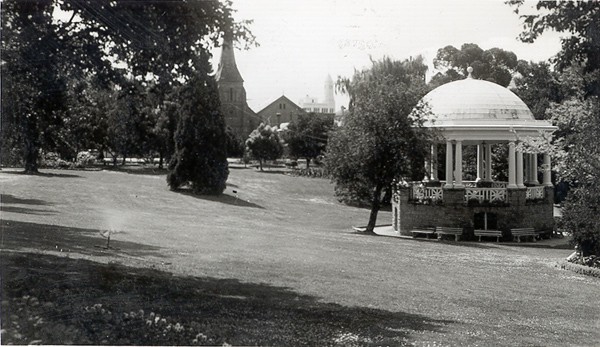
St David's Park, Hobart
Postcard
Tasmanian Archive and Heritage Office: WC1919/05/22 p18
Images from the TAHO collection that are part of The Commons have ‘no known copyright restrictions’, which means TAHO is unaware of any current copyright restrictions on these works. This can be because the term of copyright for these works may have expired or that the copyright was held and waived by TAHO. The material may be freely used provided TAHO is acknowledged; however TAHO does not endorse any inappropriate or derogatory use.

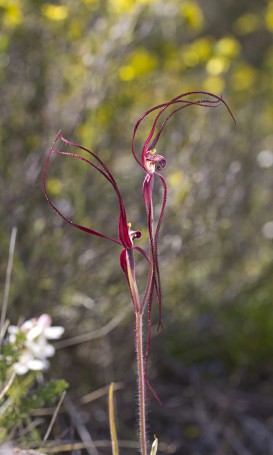
Caladenia filamentosa (ii)
Caladenia filamentosa (daddy longlegs) flowering in Ridgeway Park, Hobart, Tasmania. This was another first for me. Apparently this orchid is rather uncommon in Tasmania and usual appears after fires.

Ezra and Bottleheads, Dark Mofo, Dark Park, Hobart
27530184453_a2604aa3b4_k

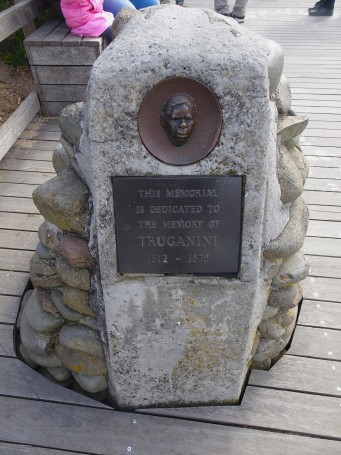
Bruny Island. A memorial to Truganini the last of the Tasmanian Aboriginals who died in 1876. On The Neck isthmus.
Bruny Island.
This rugged, and in places pristine island, saw many explorers come and go before the penal settlement on Van Diemen’s Land began in 1804. The first white explorer was Abel Tasman in 1642 followed by Tobias
Furneaux 1773 ( he named Adventure Bay after his boat), James Cook 1777 , William Bligh in 1788 and with Matthew Flinders in 1792. French explorer Bruni D’Entrecasteaux also visited in 1792 and named the channel beside the mainland after himself and the island was named Bruni, later changed to Bruny. He charted part of South Australia too and there is a D’Entrecasteaux Reef near Fowlers Bay. Next came Nicholas Baudin to Bruny Island in 1802. By that time sealers, mainly Americans, were partially settled on Bruny Island and the large scale kidnapping and sexual exploitation of the Nuenonne women began.
Large areas of the island are National Parks providing habitat for several endangered bird species and geographically north and south Bruny are quite different. North Bruny is more undulating with large areas of cleared land for agriculture whilst South Bruny is more rugged with 200 metre high cliffs facing the ocean, less cleared areas and a lighthouse to guide shipping on its southern tip. The two islands are connected by an isthmus or tombola which is called The Neck. As with most areas of Bruny The Neck was a significance place to the Nuenonne Aboriginal people who occupied the island before white settlement. The most prominent full blood Aboriginal person in Tasmania, and sadly the last of her people to die in 1876, was Truganini who was born on South Bruny in 1812. The first white settlement on Bruny happened in 1818 when James Kelly was given authority to have assigned convicts on the island’s northern tip to grow vegetables and fruit for Hobart. He later established a whaling station on South Bruny. As he was situated at the entry to the Derwent River he became the harbourmaster for Hobart. He was buried in St David’s Park Hobart. The government also sent convicts in the 1820s to South Bruny to gather salt, fell timber and burn lime for the building trade. Then in 1829 the Nuenonne occupation was restricted when the government granted free to Richard Pybus almost 2,600 acres in the north and middle section of Bruny and shortly afterwards a further land grant to George Augustus Robertson a self-styled amateur missionary who received about 500 acres. Pybus was later granted another free 2,300 acres on South Bruny which was only exploited for its timber, not farming. More white settlers followed. Cape Bruny lighthouse was operational in 1838 and only automated in 1993. Ferry services to Bruny Island began around 1900. Image above by Martin Boyce.
The life story of Truganini is amazing and impressive. In 1828 when the Lieutenant Governor of VDL Sir George Arthur decided to expel all Aboriginals from the central settled districts. That edict affected Truganini. In 1829 she was one of about 12 Aboriginal people that George Robertson brought into to his mission and she spent the next 12 years under his control. She joined him in a series of exhausting walks around Tasmania including the rugged and isolated west coast trying to round up any remaining Aboriginal people for their removal to one of the islands of Bass Strait. During one of these arduous trips Truganini saved Robertson’s life when he nearly drowned in a
river. She remained loyal to Robertson throughout this period as did the male Aboriginals who trekked with him. This was the follow up from the failure of the Black Line of 1830. In 1835 Robertson declared all Aboriginal people had been rounded up. Initially they were taken, including Truganini, to Swan Island near the north coast but soon they were moved to Cape Barren Island and finally to Flinders Island. With government approval Robertson set up a mission there for the remaining Aboriginal people of Tasmania. Sadly influenza and syphilis drastically reduced their numbers in a few years. Despite the mission Truganini and others were able to escape to join up with sealers if they wished or to hunt and gather as they had in their homelands. Truganini had dozens of sexual partners in her life time and four husbands but she never had children of her own. Like most of the people on Flinders Island she felt betrayed as many had agreed to being rounded up on the belief they would eventually able to return to their own country. This never happened. In 1841 Robertson left Wybalenna mission and went to be the Aboriginal Protector in the Port Phillip Bay district. He took Truganini and several other loyal Aboriginal supporters with him. Truganini hated the Melbourne settlement and ran away many times. At one stage she faced charges associated with a murder but she and the other women involved were all acquitted with no charge to face. Thus in 1842 Truganini is returned to Wybalenna station on Flinders Island. But in 1847 the remaining 47 Aborigines at Wybalenna were transferred to a new mission station at Oyster Cove near Kettering and Bruny Island. This was a wonderful moved for Truganini as it was back in her ancestral lands. As the number of Tasmanian Aboriginals declined through mortality and disease some scientists became very interested in the skulls and sometimes other body parts of the last of the race. Truganini became a “show piece” and was sometimes paraded through the streets of Hobart in a fine silk gown. She was introduced to the Duke of Edinburgh when he visited Hobart in 1868. She was photographed for posterity in 1866 and by others unofficially. When Truganini was the last Aboriginal person alive at Oyster Cove she was moved to Hobart and the mission site closed in 1873. She died in Hobart 1876. She was secretly buried in the former Cascades Female Factory which was then a female prison. She had extracted an agreement from her keepers before her death that her remains would not be publically displayed but in 1878 her body was exhumed and given to the Royal Society of Tasmania. Then in 1888 her skeleton was removed and taken to the Melbourne International Exposition. In Melbourne a cast was made of her skeleton which was displayed in the Museum of Victoria until 1969. In 1904 another a cast of her skull with an articulated skeleton was given by the Museum of Victoria to the Museum of Natural History in New York. Her actual skeleton was displayed in the Tasmanian Museum and Art Gallery from 1904 to 1947. In the centenary year of her death 1976, after a long legal battle, her remains were returned to the Tasmanian Aboriginal Centre. The remains were cremated and scattered in D’Entrecasteaux Straits as promised to Truganini in 1876. Her image as the last of her race has been sent around the world and the best known authentic portrait was painted by former convict artist Thomas Bock in 1835. It is owned by the British Museum and it depicts Truganini wearing a shell necklace. Above is another painting of Truganini by Benjamin Duterrau.
The Neck and Truganini Memorial.
In 1847 Truganini was sent from Wybalenna to an old convict station at Oyster Cove near Kettering. Here she was happier as she was back in her Nuenonne country where she could see Bruny Island, her birthplace, across the channel. Whenever she could she would get a boat to take her across the channel from Oyster Cove to Bruny Island. At the Neck on the coast side she would make camp as her family had done, walked around naked without European clothes and gather mussels, oysters and scallops which she cooked over an open fire. On the ocean side
she would dive for crayfish, gather shells to make her necklaces and search nests and holes at the southern end for penguin or swan eggs, or baby mutton birds. Settlers would give Truganini supplies of tea, potato and tobacco for the duration of her camp on the island. Image above by Caroline Zones 2012.

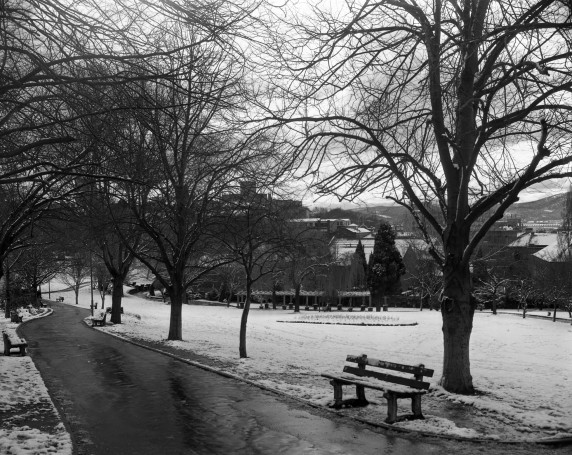
St David's Park - Hobart under snow circa 1951-1973
Tasmanian Archive and Heritage Office: WC1919/05/22 p18
Images from the TAHO collection that are part of The Commons have ‘no known copyright restrictions’, which means TAHO is unaware of any current copyright restrictions on these works. This can be because the term of copyright for these works may have expired or that the copyright was held and waived by TAHO. The material may be freely used provided TAHO is acknowledged; however TAHO does not endorse any inappropriate or derogatory use.

Work as art #1, Dark Mofo, Dark Park, Hobart
28066689301_95b9e13bef_k

Headstones from the original cemetery in Hobart. Headstones date from 1803. In St David's Park Hobart. Law Courts on the left.
St David’s Park.
This was originally the first Hobart graveyard, right opposite the first hospital on the corner of Salamanca Place and Davey Street. Was this a coincidence or expeditious planning? In 1926 the graveyard was converted into this park. In the centre is a fine memorial to Lieutenant Governor Collins. Some of the old headstones are now on the wall behind the Tasmanian Supreme Court. Collins you will remember was the first Lieutenant Governor of VDL and found a new mistress among the Norfolk Islanders, 16 year old Margaret Eddington. In Sydney he had had two children with Ann Yeates in the 1790s. His wife always remained in England. He had two illegitimate children with young Margaret Eddington before he died in 1810. His morals and administration were heavily criticised by the NSW Governor William Bligh.

P1120318
18142897813_3c1a141899_h

IMG_1055
"Stiff Shifters" Shannon's Expo Rosny Park Hobart 2011 (reprocessed).

Salamanca Markets & surrounds
49280499201_b5e94cd832_h